Synopsis
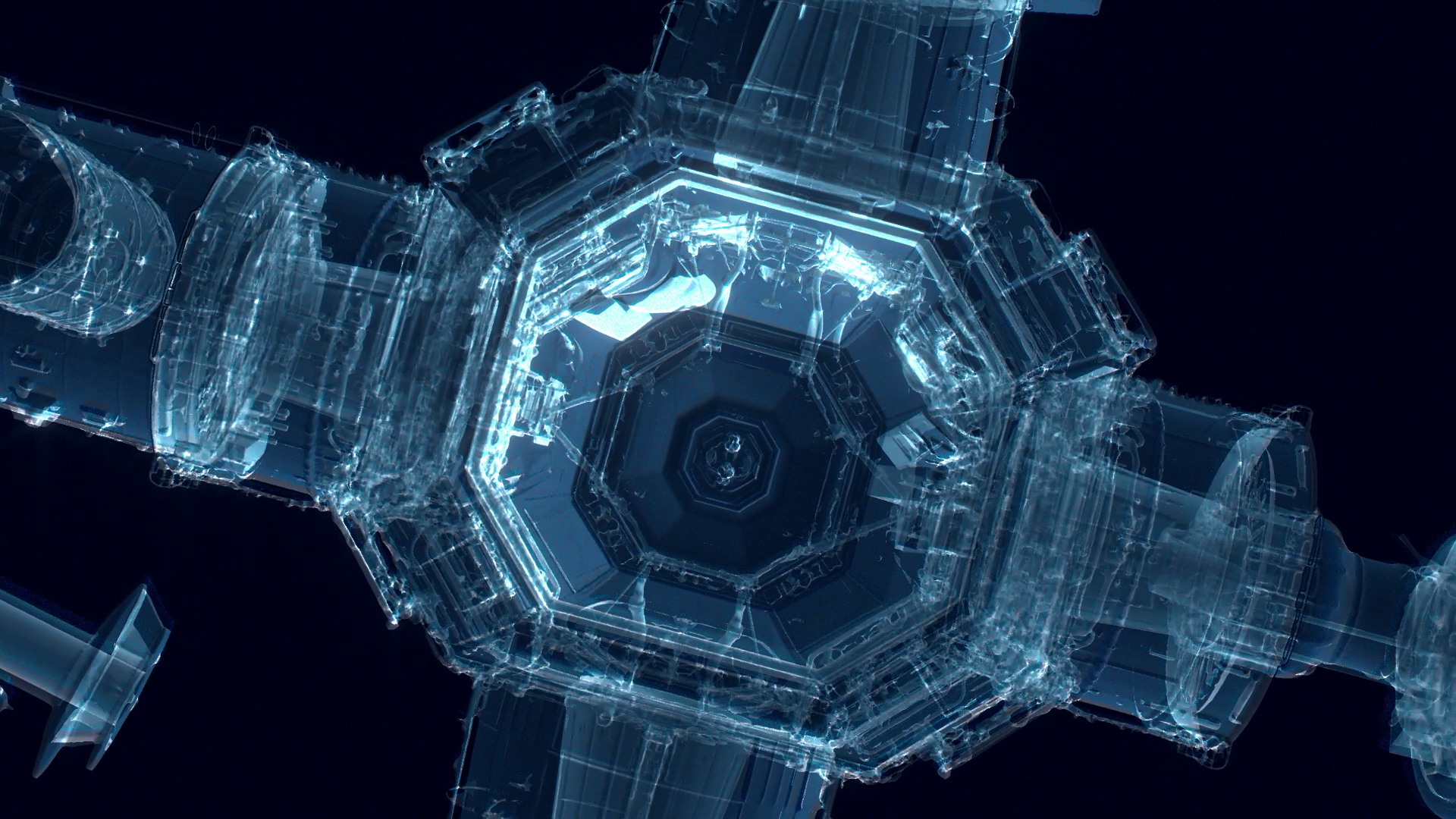
Located 400 kilometers above Earth, the Center would have been conceived alongside the development of space tourism. No material trace of it remains; only the fragmented accounts of a handful of tourists who became narrators despite themselves, while the multitude left on Earth perceives only its echo.
Did the Center produce an experience, or merely the conditions for its narration?
Between fiction and archive, a weightless camera explores the vestiges of this ghost architecture.
Situé à 400 km de la Terre, le Centre aurait été conçu avec le développement du tourisme spatial. Aucune trace matérielle n’en subsiste ; seulement les récits fragmentaires d’une poignée de touristes devenus narrateurs malgré eux, tandis que la multitude restée au sol n’en perçoit que l’écho.
Le Centre produisait-il une expérience, ou seulement les conditions de son récit ?
Entre fiction et archive, une caméra en apesanteur explore les vestiges de cette architecture fantôme.


I conceive architecture as a machine for producing narratives.
The Center Hypothesis imagines a weightless art institution from which no material trace remains. No images, no documents. Only voices attempting to fill the void: the fragmented accounts of a handful of tourist-narrators.
The film operates through friction between what is shown and what is said, between the clinical precision of institutional language and the intimate inadequacy of personal testimony. The architecture of the Center — its modules, names, and protocols — functions as a character in its own right: a structure that once contained something, and now contains nothing.
The film questions the way experience transforms into archive. The Center is also an institution of space capitalism: it exists to provide wealthy tourists with something profound to recount. By entrusting the memory of art to those who can afford to consume it, the film raises a question that concerns both the art world and space tourism: who gains access to experience, who is excluded from it, and whose memory is preserved?
Je conçois l’architecture comme une machine à produire du récit.
The Center Hypothesis imagine une institution artistique en apesanteur dont il ne subsiste aucune trace matérielle. Pas d’images, pas de documents. Seulement des voix qui tentent de combler le vide : les récits fragmentaires de quelques touristes-narrateurs.
Le film procède par frottement entre ce qui est montré et ce qui est dit, entre la précision clinique du langage institutionnel et l’insuffisance intime du témoignage. L’architecture du Centre — ses modules, ses noms, ses protocoles — fonctionne comme un personnage à part entière : une structure qui a contenu quelque chose, et qui ne contient plus rien.
Le film interroge la façon dont une expérience devient archive. Le Centre est aussi une institution du capitalisme spatial : il existe pour fournir aux touristes fortunés quelque chose de profond à raconter. En confiant la mémoire de l’art à ceux qui ont les moyens de le consommer, il pose une question qui concerne le monde de l’art autant que le tourisme spatial : qui a accès à l’expérience, qui en est exclu, et de qui garde-t-on la mémoire ?